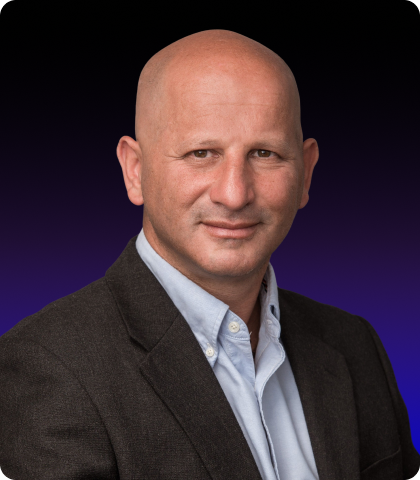


The CEO of Ansay & Associates on why AI won’t displace the local agent — and why education, data governance, and a culture built around human relationships are the foundations that will carry independent agencies through the next wave of transformation
The future of the independent insurance agency will be shaped by more than AI adoption. It will depend on how agencies combine technology with data governance, workforce development, carrier relationships, and the human expertise that builds client trust. Mike Ansay’s Independent Agency of 2040 framework brings these elements together into a model for how independent agencies can remain competitive as the industry transforms.
Key Takeaways
- Speed and trust are multiplicative, not substitutes: AI-enabled speed in quoting, claims handling, and service doesn’t diminish the human relationship — it protects the time needed for the interactions that actually build loyalty and retention. For independent agencies, getting faster is how you get more human where it counts.
- Digital transformation cannot be outsourced: Ansay University exists because Ansay concluded that re-skilling requires internal ownership and cultural commitment. Agencies that rely entirely on outside training programs will always lag the pace of change — and the incoming generation of AI-literate employees will outpace those who don’t invest in bringing everyone else along.
- Data ownership is a strategic asset, not a compliance checkbox: Most independent agencies signed technology contracts without examining what data rights they were surrendering. The book of business — risk type, profitability profile, embedded client relationships — is the agency’s most valuable competitive asset, and contracts need to reflect that explicitly before the leverage disappears.
- Perpetuation requires structure, not just intention: Pairing senior advisors with younger colleagues years before retirement, and building mentorship into the operating model, is the only reliable way to prevent institutional knowledge from walking out the door. The judgment calls experienced advisors make without being able to articulate why are exactly what technology cannot yet capture.
- Family ownership creates a different and durable time horizon: The “life after the deal” philosophy — treating acquisitions as transitions rather than transactions, with a three-to-five-year integration plan — produces measurably higher retention of clients and employees than models built around rate of return. Patience with capital is itself a competitive advantage.
- The trusted advisor role expands as AI absorbs the transactional: As agentic AI handles quoting, diagnostics, and administrative load, the independent agency’s role shifts toward proactive risk partnership — embedded in clients’ business models, calling three months before renewal rather than waiting for the phone to ring.
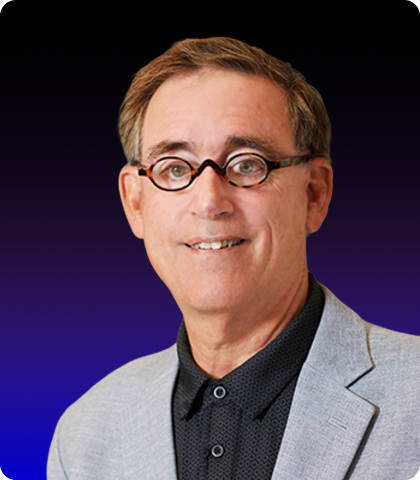
Mike Ansay has a habit of being early. He studied digital transformation at Columbia in 2017, when most independent agency CEOs were still debating whether digital was a threat or a trend. He launched Ansay University, an internal education program spanning AI literacy, management development, and sales training, years before the industry consensus settled on “re-skilling” as the answer to technology disruption.
An alum of Marquette University, Ansay helped spark the school’s Insurance Leadership Program nearly three decades before it officially launched in 2025.
So while his own insurance agency is firmly grounded in the present, Ansay’s line of sight is fixed on what such an entity will look like in 2040. With a vision of the agency as a trusted advisor, Ansay has already built his “Independent Agency of 2040” framework. And, before most agencies had finished debating whether ChatGPT was a toy or a threat, Ansay was already focused on incorporating the AI platforms in concert with human-centered intelligence under the ethos of “Local Touch. High Tech. Human Heart.”
None of this is accidental. Ansay, chairman and CEO of the Wisconsin-based Ansay & Associates — a family-owned independent agency now approaching $65 million in revenue across 34 offices in five states — has spent his career reading where things are going and building infrastructure well before the moment of necessity arrives. The philosophy running underneath all of it surfaces in a single phrase he dropped near the end of a recent conversation with The Insurance Lead: “Speed equals trust.”
It sounds simple. But unpacked against everything Ansay has built over four decades, it turns out to be the key to understanding both where he thinks the independent agency is headed and why he believes agencies like his are more relevant now than they have ever been.
The trust equation
Transactions with Amazon, airlines, and grocery delivery services that required phone calls, paper forms, and days or weeks of waiting, now happen in seconds on a phone. Insurance hasn’t caught up. And Ansay doesn’t pretend otherwise. But he reads that gap as opportunity rather than failure.
“When you think of speed, it creates trust,” he says. “Think of Amazon — it’s trust and speed. They call it up, they get it the same day. So to them, trust has been replaced with speed.”
For younger generations entering the insurance market as customers, the speedy transactional expectation is already set. The question for independent agencies is whether they can meet that expectation on the purchase side, providing fast quotes, digital-first onboarding, and seamless self-service.
At the same time, independent agencies must preserve the empathic quality of “showing up at the moment of truth,” as he calls it, when something goes wrong.
“We just had a tornado go through Appleton, Wisconsin,” he says. “We have two offices there. Our staff set up everything. They’re working with clients. They need water, we give it to them. We make every effort — because that’s when you find out your value to somebody.”
Ansay isn’t arguing that the human element of insurance is immune to disruption. Neither is he saying that people are simply unnecessary to insurance operations as the agentic era takes hold. Instead, Ansay’s main point is that swiftness and trust are multipliers, not substitutes. Agencies that get faster don’t become less human; they free up their people to be more human where it counts.
Building the PEAK program
The infrastructure Ansay has built to act on that belief starts with the PEAK program (People, Expertise, Alignment, Key Metrics), which routes roughly 80% of Ansay & Associates’ revenue through a concentrated set of key carrier relationships.
Ansay started building the concept 15 years ago. He drew on a lesson he’d absorbed earlier in his career; namely, that volume and profit dictate relationships — and relationships dictate everything else.
“Within these PEAK programs, we’re able to drive more revenue to critical carrier companies that provide us better markets, better opportunities, better appetite,” Ansay says. “And along with that comes more profitability. When you get that going, you’re meeting with the C-suite on a regular basis and strategizing on a higher level.”
The mechanics are specific. Every account that flows through a PEAK carrier gets a double set of eyes — an underwriter and a sales manager reviewing it together. Submissions are evaluated by underwriting leadership once a quarter. The communication is constant and structured, which is precisely what differentiates it from the looser carrier relationships most independent agencies maintain.
The results are visible. Some carriers came into the PEAK relationship at $2 million in placed premium. Today those same relationships are at $40 million. That trajectory is what PEAK was designed to create — and it’s now evolving to include agentic AI for real-time quoting in personal lines and small commercial, tightening the carrier partnership even further through technology integration.
The re-skilling imperative
The piece of Ansay’s operation that gets closest to the heart of his philosophy has got to be Ansay University. Based on the principle that talent and transformation are connected, Ansay University is not composed of a physical campus and dorms. Instead, it takes the form of an internal education infrastructure that Ansay describes, not as a training program, but as a cultural commitment.
“We are not retraining people, we’re re-skilling them,” Ansay says. “They have the skill. We’re just giving them AI as an augmentation — it only helps accelerate what you do and should make you better.”
Cohorts of ten apply to participate in the university’s 12-month programs for middle managers, which cover multiple disciplines, including governance, communication, and leadership development.
With an inventive approach, each track organizes itself in unique ways. There are Sales Dynamics training tracks coordinated with the company functioning as a train-the-trainer organization. Ansay sourced AI literacy programs from a technical college in Wausau, Wisconsin, first vetting and validating the curriculum through human resources before running all managers through it, then extending it to the broader employee population one-on-one.
Ansay University runs parallel to Ansay’s other higher education pursuits. In addition to seeding what has since become Marquette’s leadership program, he’s bringing in the CEO of The Hartford and other industry leaders to raise the funding needed to build it into a formal specialization within the business school. Separately, he’s establishing a sales center at Concordia College where students make appointments and can be recruited directly into careers at Ansay & Associates.
Throughout the variety of these endeavors, the motivation is consistent: stay present, but look forward. “Unless you have strong processes, change management, data that’s really good, workflow figured out — it becomes very problematic to implement change,” Ansay notes. “Anybody in this industry two years from now will not recognize it again. And unless you’re being trained properly for the future, you can’t go forward.”
One observation he makes about the incoming generation stands out: “In the college world, bringing young people in — they’re already AI literate and trained. So that group’s coming in.” The education challenge, then, is less about the youngest cohort than about bringing middle and senior employees up to speed.
The data ownership problem
The Ansay 2040 framework is built to deal with another issue —one that Ansay argues most independent agencies are underestimating: data ownership. His position is blunt. As he tells it, in the U.S. market, data rights are governed by contract, and most agencies signed those contracts without examining what they were giving away.
“A couple of our insurance tech companies use our data and resell it,” he says. “ It’s already sold to other people that use it for the purposes of making money off my data. We’re babes in arms — we don’t get the memo, and all of a sudden one day you figure it all out and you go, ‘Holy cow.’“
Ansay’s 2040 framework positions data ownership as pillar four — a strategic imperative as opposed to a compliance checkbox.
The agency’s stated position is that it is a steward of client data, not merely a user of it. That comes with obligations to protect it, govern it, and harness it to create value rather than monetize it for others. Contracts, Ansay stresses, need to reflect that position explicitly — and for agencies that have already signed agreements that don’t, the options are renegotiation or finding a different vendor.
The broader point he makes for independent agencies is that the book of business — the risk type, the profitability profile, the client relationships embedded in it — is the agency’s most valuable asset. Agencies that allow that asset to flow freely into third-party platforms without understanding the contractual terms are giving away competitive advantage they may never recover.
The perpetuation challenge
Ansay has also brought prescience to another developing storm. A consensus has emerged in insurance circles around the burgeoning “silver tsunami” plaguing all industries. As a number of studies have pointed out, a wave of Baby Boomers will be retiring from insurance over the next decade. Meanwhile, an estimated 25% of insurance professionals are under the age of 25. The enormity of exits and the inability to add new entrants to make up for the loss could lead to a gap of 400,000 jobs.
Yet Ansay’s approach to the talent imbalance is less about recruitment panic and more about establishing lines of continuity in expertise. To avoid the talent crisis, Ansay has mapped retirements across the organization for the next decade, identified the timing of each, and assigned younger partners to work alongside senior advisors on their accounts well before any transition occurs.
“We’re stratifying age with accounts,” he says. “Somebody that’s in their 60s, we park in with somebody that’s in their 30s to partner on the accounts on regular calls. So when a transition occurs, there’s no fall off.”
This anticipates the harder problem, as Ansay defines it: capturing the institutional knowledge that doesn’t live in a database. The relationship histories, the market instincts, the judgment calls that experienced advisors make without being able to fully articulate why — those are what the perpetuation program is actually trying to capture. Technology helps, but can’t do it alone. The mentorship layer is where the real transfer happens: senior leaders working directly with one or two or three people at a time, functioning as advisors for situations that don’t have clean answers.
“What it really comes down to is your sounding board,” Ansay says. “When you’re younger and you get in a situation, you need to talk to somebody.”
The independent agency of 2040
All of this — the PEAK program, Ansay University, the data governance posture, the perpetuation strategy, the AI integration — feeds into a single long-term bet: that the trusted advisor model of the independent agency is not a static legacy to be defended but an evolving foundation to be built on.
The “Independent Agency of 2040” framework Ansay has developed positions the trusted advisor at the center of an expanding set of capabilities: AI analytics in real time, proactive cyber and risk management, claims advocacy that is faster and fairer, employee benefits as a strategic solution, and carrier partnerships that are genuinely aligned rather than transactional. The frame is explicitly not about doing what agencies already do but faster, rather it is about making the agency more essential — a strategic partner embedded in the business models of its commercial clients —not just a policy processor they call when something goes wrong.
“Insurance, along with banking, legal, and all of that, becomes a strategic part of a business model,” Ansay says. “But to be that proactive is what we want to get to.”
The family ownership dimension matters here, Ansay says. Ansay & Associates is one of roughly 75 independent agencies that remain family-owned rather than venture
capital-backed, he notes. And he is deliberate about what that means for the agency’s approach to acquisitions, to talent, and to time horizon.
When the firm buys another agency, he calls it “life after the deal” — a clear acknowledgment that for the seller, this is not a mere transaction; it is a transition, often the culmination of a career.
Venture capital has a different calculus, and Ansay doesn’t begrudge it. But his agency’s ability to retain the business it acquires, and the people who came with it, traces directly to the patience he’s willing to bring to that moment.
“When people sell their agency, it’s a death. And this is what venture capital people really don’t care about,” he says. “We have a three-to-five-year plan. If you can’t be patient with the capital, then you probably shouldn’t be buying.”
The agency that emerges from all of this investment — in education, in carrier relationships, in data governance, in talent — is one that Ansay is confident will be more competitive in 2040 than it is today. Not because it will look the same, but because it will have done the work of changing on its own terms, ahead of the pressure rather than in response to it.
“Speed equals trust,” Ansay says. “Do what you say you’re going to do and do it well. In a new world, that’s still what it comes down to.”