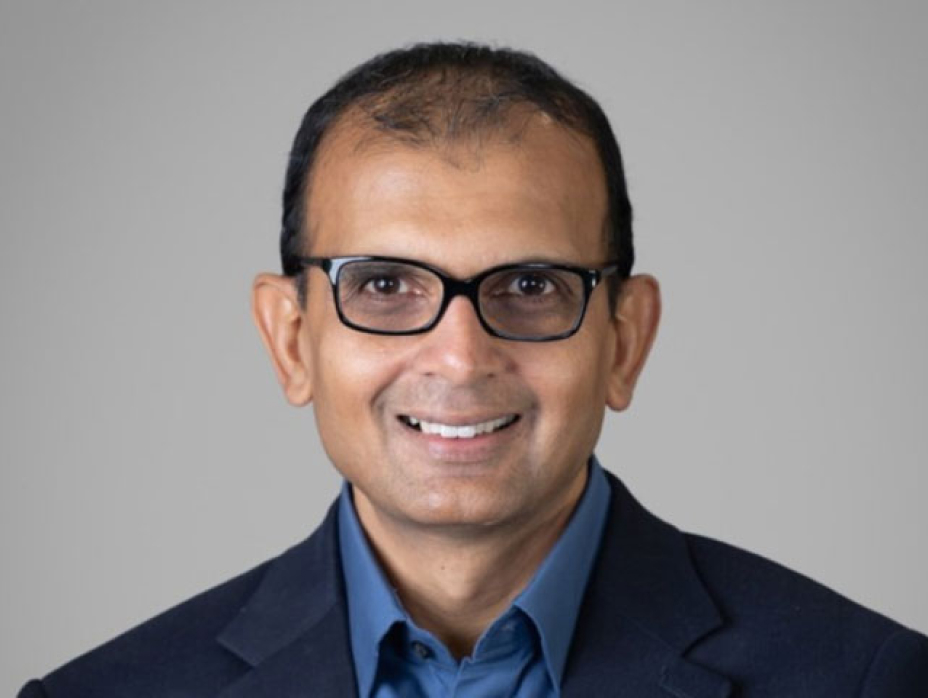


InsurTech Israel founder Kobi Bendelak on agentic AI’s management problem, why Midwest US carriers have crossed a threshold, and the honest case for why geography still matters even as it matters less.
Key takeaways
- AI is infrastructure, not a tool: Bendelak draws a clear line between treating AI as a project or technology initiative and treating it as strategic infrastructure — as foundational to the business as electricity. CEOs who approach it as the former will find themselves repeatedly starting over.
- Midwest carriers have crossed a threshold: The “cautious curiosity” that characterized carrier engagement with insurtech in previous years has given way to a more urgent posture. Carriers that visited during the roadshow understood that staying on the sidelines is no longer a viable strategy.
- Insurtech maturity means revenue, not pilots: The era of “try it and see” is over. Startups entering the global market need real products, real customers, and real pricing. The shift benefits the industry by raising the quality of the innovation pipeline carriers actually engage with.
- The next geography of innovation is everywhere: AI has made it possible to build world-class insurtech products from Ecuador, Kenya, or Vietnam as easily as from Tel Aviv or San Francisco. The competitive advantage now belongs to founders who understand a problem deeply and execute quickly — wherever they happen to be.
Kobi Bendelak has spent over a decade at the intersection of Israeli technology and global insurance. After starting and running one of Israel’s major MGAs, the Tel Aviv-based entrepreneur built InsurTech Israel into something considerably more ambitious than a regional showcase.
While the second half of 2026 has barely started, Bendelak is already well into planning for next year. In 2027, the organization will move to a four-city global accelerator program, with bases in London, and three additional markets across Africa, Latin America, and the Asia Pacific. InsurTech Israel’s expansion is premised on Bendelak’s conviction that the next wave of insurance innovation will emerge from places the industry hasn’t been watching.
The peripatetic Bendelak’s recent travels confirmed something about the nature of emerging tech. He’s come to think that tech advances, particularly the kind that the insurance industry is focused on, are no longer the sole province of startups in Silicon Valley or New York. Bendelak advises insurance organizations looking to adapt to AI must be open to advances coming from anywhere, from their own respective backyards to remote places half a world away.
For most of the current insurtech era, geography determined access: to capital, to engineering talent, to the investor relationships that allowed a startup to survive long enough to find product-market fit. Bendelak argues that AI is dismantling those barriers faster than the industry realizes, and that the carriers and investors scanning only the established tech hubs are making a systematic error.
At the same time, he has been watching something shift inside U.S. carriers. He’s particularly focused on the Midwest, where a roadshow earlier this year took InsurTech Israel through meetings with EMC, Nationwide, Great American, Cincinnati, Grange, Principal, and others. Despite the lack of attention that region gets from the tech elite, Bendelak saw no trace of the “cautious curiosity” of previous years. The conversation, he says, has moved.
The Insurance Lead spoke with Bendelak about agentic AI’s emerging management problem, what insurance CEOs should actually do with AI on Monday morning, and why Israel remains a distinctive source of insurtech innovation even as the world flattens around it.
You’ve argued that AI is flattening the world and that insurance innovation will come from everywhere. What do you mean by that?
Kobi Bendelak: For decades, technology innovation was concentrated in a handful of ecosystems such as Silicon Valley, London, and Tel Aviv. That was not because talent existed only there, but because those locations concentrated capital, engineering talent, investors, and the infrastructure required to build technology companies.
AI is fundamentally changing that equation. Development costs are falling, sophisticated tools are available almost everywhere, and small teams can now build products that previously required large engineering organizations. For carriers figuring out what this means for their own operations, ReSource Pro’s AI in Insurance resource breaks down the practical implications.
Competitive advantage is becoming less about where a company is located and more about how well it understands a problem, how quickly it executes, and how effectively it uses data. That is why I believe the next generation of insurance innovation will emerge from many more places than in the past. Geography will matter less than talent, creativity, and execution.
You recently completed a Midwest roadshow visiting carriers including EMC, Nationwide, Great American, and Cincinnati. What did you find there that surprised you?
What impressed me most was the shift in understanding. In previous years, I found curiosity — carriers were interested in what was happening, but they were comfortable staying on the side.
This time was different. The executives we met understand that this is not around the corner anymore. It is right here. They need to do something, and they cannot ignore it or postpone it, because if they don’t move, someone else will move instead of them. That understanding — that urgency — is what really struck me. They are ready in a way they were not before.
The industry conversation around agentic AI tends to default to “human in the loop” as the safety answer. You seem skeptical of that framing. Why?
You cannot have a human in the loop with agentic AI. It is running too fast, operating at too great a scale. People cannot manage it. What you need instead is a management layer for the agents themselves — something that guides them, filters their outputs, updates their missions and tasks, and keeps them aligned as conditions change. Think of it less as a gatekeeper and more as a quarterback: someone calling the plays, reading the field, sending the right agent on the right mission at the right moment.
But because the scale is so high, that quarterback cannot be a person. It has to be another AI.
The real question the industry needs to grapple with is not how to keep humans in the loop on individual decisions — it is how to build the AI management infrastructure that governs the whole system.
Can you clarify your views on the “human in the loop” with respect to AI agents?
I actually believe that the traditional concept of “human in the loop” is not feasible, and this is one of the central arguments I develop in my doctoral research.
The scale, speed, and complexity of the decisions made by AI agents will far exceed what human managers can realistically oversee. While human review may remain appropriate for a limited number of high-impact or exceptional decisions, it cannot serve as the primary governance model for organizations where AI systems are making thousands — or even millions — of decisions every day.
Instead, I believe AI ecosystems will increasingly be supervised and managed by other AI agents and advanced technological control systems. These systems will continuously monitor performance, detect anomalies, audit decisions, optimize processes, retrain models when needed, and even deploy new AI capabilities to ensure compliance with organizational policies, business objectives, and regulatory requirements.
The role of human leadership will therefore shift from operational supervision to strategic governance.
Executives and boards will define the organization’s vision, objectives, risk appetite, ethical principles, and governance framework. They will determine the rules under which AI systems operate, but the ongoing monitoring, control, and day-to-day management of those systems will itself be performed by AI and other technological oversight tools.
In other words, I believe the future is not “human in the loop,” but rather “AI supervising AI under human governance.” Human leaders will define the framework and remain accountable for it, while AI systems will execute, monitor, and continuously improve operations at a scale and speed that humans simply cannot match.
What has to change inside carriers before agentic AI can actually be deployed responsibly at that scale?
First, carriers need to resolve the foundational questions: if an agentic AI is operating inside claims or policy amendment workflows, is its output covered? What are the exclusions? How do you measure the risk it introduces, and how do you build prevention around it?
Those are underwriting questions as much as technology questions. The second layer is internal governance — building the systems that can manage AI agents at enterprise scale, update their guidance, and produce auditable outputs. The implementation is actually the easy part. The output is where the problem lives.
Your global program in 2027 is moving to four cities across four regions in a single year. What does that structure accomplish that separate cohorts didn’t?
Each of our previous cohorts taught us something, but together they revealed a larger opportunity. The greatest value comes from connecting ecosystems, not just running them in parallel. When an Israeli startup meets an American insurer, a London investor, and a founder from Guatemala, everyone benefits. Startups build global relationships. Insurers gain continuous exposure to innovation from regions they wouldn’t otherwise be watching.
As a result, InsurTech Israel is no longer simply an accelerator; it is a global platform that continuously connects innovation with the insurance industry.
You require “revenue-generating” startups in the program. Why draw that line?
While we are more than an accelerator, InsurTech Israel is not an incubator. Our mission is to accelerate companies that already have products, customers, and market validation.
We also have a responsibility to our insurance partners. When insurers dedicate time to meeting startups, they should meet companies capable of running pilots, integrating solutions, and creating measurable business value.
We are not merely bringing interesting ideas. We are bringing actual, practical solutions that insurers can realistically work with. It all reflects the maturity of today’s insurtech industry.
What should a CEO do differently on Monday morning?
The first step is recognizing that AI is not another IT project.
AI is changing how insurance companies operate, compete, make decisions, and create value. CEOs should move away from isolated AI initiatives and begin building an enterprise-wide AI strategy. I encourage leaders to view AI as an evolutionary process.
It starts by improving models, then transforms business processes, later supports decision-making, and ultimately reshapes the operating model of the insurance company.
At the same time, leaders should broaden the discussion beyond technology and ask how AI will influence trust, competition, governance, accessibility, financial stability, and regulatory expectations. Those are the strategic questions that will define the industry’s future.
Frequently asked questions
Q: What is agentic AI in insurance?
A: Agentic AI refers to AI systems that operate autonomously at high speed and scale, making thousands or millions of decisions per day across insurance workflows such as claims and policy amendments. Unlike traditional AI tools, agentic AI acts independently, which creates a management and governance challenge for insurance carriers.
Q: Why doesn’t “human in the loop” work for agentic AI?
A: Human in the loop is not feasible for agentic AI because the scale, speed, and complexity of agent decisions far exceed what human managers can realistically oversee. Kobi Bendelak argues that while human review may remain appropriate for a limited number of high-impact decisions, it cannot serve as the primary governance model when AI systems make millions of decisions daily.
Q: What is the AI management layer for insurance agents?
A: The AI management layer is a system — itself powered by AI — that guides agents, filters their outputs, updates their missions and tasks, and keeps them aligned as conditions change. Bendelak likens it to a quarterback calling plays: reading the field and sending the right agent on the right mission at the right moment, but at a scale no human could manage.
Q: How is AI changing the geography of insurance innovation?
A: AI is lowering development costs and making sophisticated tools available almost everywhere, so small teams can now build products that previously required large engineering organizations. Bendelak argues competitive advantage is shifting from location to problem understanding, execution speed, and data effectiveness — meaning the next wave of insurtech innovation will emerge from many more places than Silicon Valley or London.
Q: What should insurance CEOs do about AI on Monday morning?
A: CEOs should recognize that AI is not another IT project but strategic infrastructure. Bendelak advises moving away from isolated AI initiatives toward an enterprise-wide AI strategy, treating AI as an evolutionary process that improves models, transforms business processes, supports decision-making, and ultimately reshapes the operating model of the insurance company.
Q: Who is Kobi Bendelak?
A: Kobi Bendelak is the founder of InsurTech Israel, an organization that connects Israeli technology with global insurance. He has spent over a decade at the intersection of Israeli technology and global insurance, previously starting and running one of Israel’s major MGAs. His doctoral research focuses on AI governance and the limitations of human-in-the-loop oversight for agentic AI.
Speak with a carrier operations expert about building your AI strategy and governance foundation.