

The Chief AI Officer says the real issue is the gap “between what the data tells you and what your people can actually act on.”
Key Takeaways
- AI models are quickly becoming commodities; advantage comes from proprietary data, processes, and expertise.
- Most insurance AI failures stem from operational and governance gaps, not technology limitations.
- Human oversight remains essential to making AI useful, trustworthy, and actionable.
- Organizations should document knowledge, workflows, and decision-making processes before scaling AI.
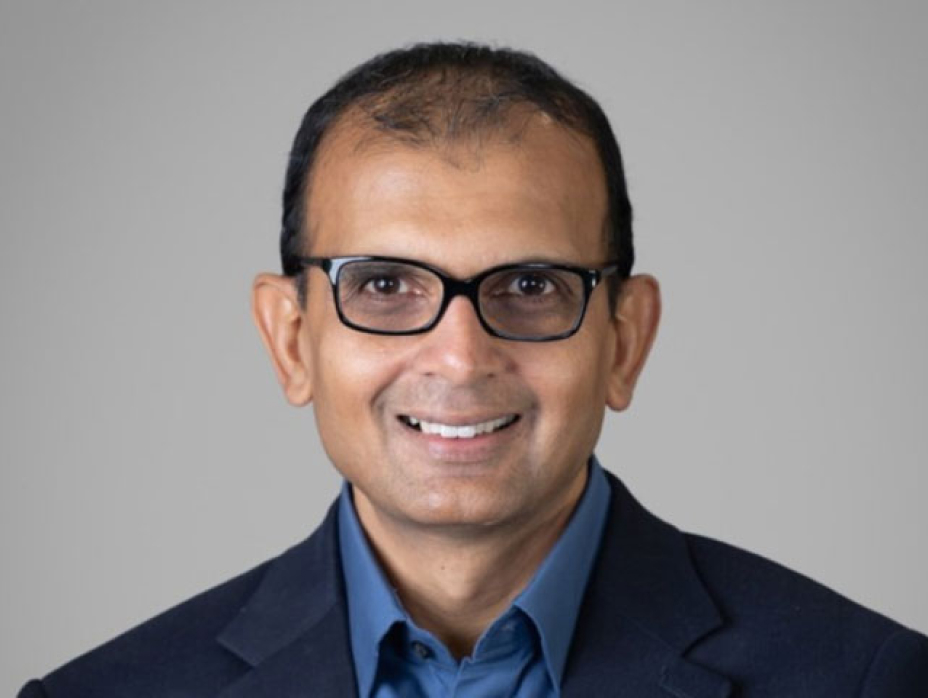
John Deahl has built AI systems across travel, maritime, and logistics. He designed Amadeus’s first GenAI customer-facing product and guided digital transformation for V.Group, a global ship management company with 45,000 employees. Now, as Chief AI Officer at telos, he’s applying that experience to insurance, an industry where data abundance doesn’t necessarily translate to operational intelligence.
At ReSource Pro Summit 2026 in Palm Springs, Deahl joined Paul Naquin, president of Technology Services at ReSource Pro, for a session titled “Data Rich, Information Poor.”
“We don’t have a data problem,” a carrier CTO told Naquin, a line that’s become an oft-repeated refrain in insurance circles. “We have tons of data. We’re actually data rich, but we’re information poor.”
In an interview with The Insurance Lead after the session, Deahl elaborated on why that gap exists and what closes it.
Why Insurance Companies Are Data Rich but Information Poor
“Most leaders don’t realize they have a problem,” Deahl said during the session. “They think it’s a dashboard issue, a reporting issue, maybe a headcount problem. The real issue is the gap between what the data tells you and what your people can actually act on. That gap isn’t a complaint; it’s really a diagnosis.”
And that diagnosis points to three places: the data organizations already own, the knowledge that walks out the door when employees retire, and technology that either bridges those gaps or becomes a bottleneck.
On data, Deahl was blunt. “Most organizations are using maybe 20% of their data in a way that’s beneficial.”
The reason is that the competitive advantage isn’t in the AI model, as might be assumed. “The models themselves have become a utility—like electricity. No one wins just by having electricity. It’s what you do with it,” said Deahl. He and his competitors can license the same model, build the same architecture, deploy the same tools. “The model is not the differentiator anymore.”
The real power rests in recognizing and utilizing your internal resources: “Your moat is your data, your processes, your IP, and your people. How do you price risk that no one will touch? How do you settle a claim that should have gone to litigation? How do you save a renewal at the 11th hour? A competitor can’t license that. That’s what’s unique to you.”
So, returning to the data, if it lives across disconnected systems and can’t be queried or accessed, it becomes a bottleneck. “It’s not a data problem. It’s a connection problem.”
Why Insurance Organizations Struggle to Turn Data Into Action
During the session, Naquin polled the audience: most companies have succession plans for their CEOs, but do they have one for the next 50 people who actually do the work? The resounding answer: no.
“Do we have a succession plan for our top five underwriters? For our senior claims adjusters? For the producer who owns half your renewal book?” Deahl asked. “That producer’s the only one who knows why an account hasn’t been renewed for the last three years. Those people have a retirement date. If your plan doesn’t exist, it’s a problem.”
This isn’t data that lives in a dashboard or shows up in an audit. It’s 20 to 30 years of pattern recognition, judgment calls, risk calculations, and relationship context that exists only in people’s heads. “The fuse is lit,” Deahl said. “You need to extract that knowledge and put it into systems before it walks out the door.”
Why AI Projects Fail in Insurance
Deahl identified three patterns where AI projects fail despite significant investment.
The first is the pilot that never scales. “It’s so easy to throw together a demo these days. It looks beautiful in a sandbox with clean demo data. But production is different. It’s a war zone at times. The system goes live and dies in production when the underwriting team uses it on Friday.”
The second is the platform play. “Vendors are selling platforms. Organizations rush in without defining use cases. The demo can’t be the use case for the platform. There has to be an underlying business need to drive investment. Otherwise, you’re working backwards.”
The third is governance—or the lack of it. “The pilot works. Everyone loves it. You want to move fast and get to market as soon as possible. But it has to be a partnership between business and technology. You can’t run so fast that you hit ‘ready to go live’ and legal or security steps in to say, ‘Whoa, stop.’ Governance has to start from day one, not when you’re ready to commit to production.”
Deahl was emphatic: “These are foundation failures, not technology failures. And the vendors aren’t going to tell you which one you’re dealing with.”
Why Human-in-the-Loop AI Matters in Insurance
In our interview, Deahl described large language models as “savant children.” They’re brilliant at specific tasks but need boundaries. “You tell them, ‘Don’t touch the stove. Don’t go outside after dark. Even when you set those boundaries, they will still violate them. They’ll just do what they think is right because they like to please.”
That creates a challenge for insurance, where precision matters. “LLMs are probabilistic, not deterministic. That goes right against the grain of repeatable answers. People want the same answer every time, especially in processes that require high precision.”
Models are improving, Deahl acknowledged, but safeguards remain essential. “You have to build in human-in-the-loop validation layers at multiple points where the process can break. The models are amazing, but they will also go off script.”
He gave an example: building AI applications without proper audit trails. “When you use a platform, everyone needs a license per seat. You don’t want to give seat licenses to 5,000 people when only 500 need them. So builds end up outside the platform, using the API layer in your secure cloud tenancy. That’s fine, but you lose some built-in controls. Economics are a huge problem—seat licenses, token costs, input and output data all have costs. Some models are very expensive, so you end up using cheaper models that aren’t as sharp from a reasoning perspective. That means you have to build in more auditing, more validation layers.”
Judgment Infrastructure and ‘The Trust Gap’
In April 2026, ReSource Pro announced a partnership with telos as part of its AI Orchestration and Data Services launch. The partnership addresses what ReSource Pro calls “the AI trust gap”—the distance between AI pilots that produce demos and production systems that can be defended to regulators, E&O carriers, and shareholders.
“We work across regulated industries, and insurance is where the trust gap is hardest to close,” telos CEO Jason Kelly said in a statement. “AI in production requires a judgment layer that makes decisions auditable, explainable, and continuously improving. What ReSource Pro has operationally is rare: two decades of documented and up-to-date workflows and the discipline to hold AI outcomes accountable. That combination is what closes the trust gap.”
Telos provides what it calls “judgment infrastructure”—systems that capture how decisions are made, measure whether those decisions improve over time, and create traceable records for every output. “Those human-in-the-loop steps have to have audit trails,” Deahl said in the interview. “Whether it’s the system making an audit for why it made a decision, the human making the audit, or the human overriding what the system did, you have to have a way to go back in history and look at that.”
ReSource Pro’s operational depth—70,000+ documented skills across two decades—provides the foundation. “All of the processes are documented,” Deahl said. “That’s half the battle with AI. If I’m given a process that’s mapped end to end, I can pretty much replicate that with different human-in-the-loop layers for validation.”
He used the airplane analogy. “A plane could land itself right now. Autopilot’s been working for years. Are you going to get in a plane without a pilot? No one wants to do that. You want a backup. That’s the same principle here.”
Three Practical Steps to Prepare for AI in Insurance
At the end of the session, Deahl gave the audience three immediate actions that require no vendor purchases.
First, map one decision in the business. “One recurring decision—submission to quote, reserve placement, renewal. Map the data flow. You’ll see where the data exists, where it dies, but you’ll also see which human is the only one who knows what to do with it. You’ll learn more from that exercise than from six months of AI strategy work.”
After that, find three reports no one uses anymore and ask why. “What’s the problem? Why did they stop trusting them? That’ll give you insight on whether it’s data quality, organizational issues, or both. Nine times out of 10, it’ll be people, process, or both. No technology buy is going to fix that.”
Lastly, start governance early. “If you wait until you’re ready to go live, you’re too late.”
Deahl’s closing frame was direct. “The answer’s not outside the organization. It’s inside. Your data, your processes, your people. If you don’t do the foundational work—cleaning data, documenting workflows, training people—it doesn’t matter what technology you buy. You’ve got it backwards, and it’s not going to fix the underlying issues.”
Frequently Asked Questions
What is the AI trust gap?
The AI trust gap is the distance between AI systems that perform well in demonstrations and AI systems that can be trusted in real-world insurance operations. Closing that gap requires governance, auditability, human oversight, and documented decision-making processes that regulators, E&O carriers, and business leaders can defend.
Why do AI projects fail in insurance?
According to John Deahl, most AI failures are not technology failures. Projects typically fail because pilots never scale, organizations purchase platforms before defining business use cases, or governance is introduced too late in the process. Problems with people, processes, and organizational readiness often create bigger obstacles than the technology itself.
What is judgment infrastructure?
Judgment infrastructure refers to systems that capture how decisions are made, track whether those decisions improve over time, and create auditable records for every output. In regulated industries like insurance, judgment infrastructure helps organizations make AI-driven decisions explainable, traceable, and accountable.
Why is human-in-the-loop AI important in insurance?
Insurance decisions often require accuracy, consistency, and regulatory compliance. Human-in-the-loop AI introduces validation and oversight at key points in a workflow, helping organizations detect errors, maintain audit trails, and ensure AI recommendations align with business and compliance requirements.
What data should insurers prioritize for AI initiatives?
Insurers should focus not only on structured data but also on institutional knowledge embedded in experienced employees, workflows, underwriting decisions, claims handling practices, and customer relationships. According to Deahl, an organization’s competitive advantage comes from its unique data, processes, expertise, and intellectual property—not from access to AI models alone.
How can insurers prepare for AI adoption?
Deahl recommends three practical first steps: map a critical business decision from start to finish, identify reports that users no longer trust and understand why, and establish governance before launching AI initiatives. These activities help uncover data, process, and knowledge gaps that technology alone cannot solve.